Case Study
Icertis CKO 2026
A complete visual system for a company's most important week of the year.
A complete visual system for a company's most important week of the year.
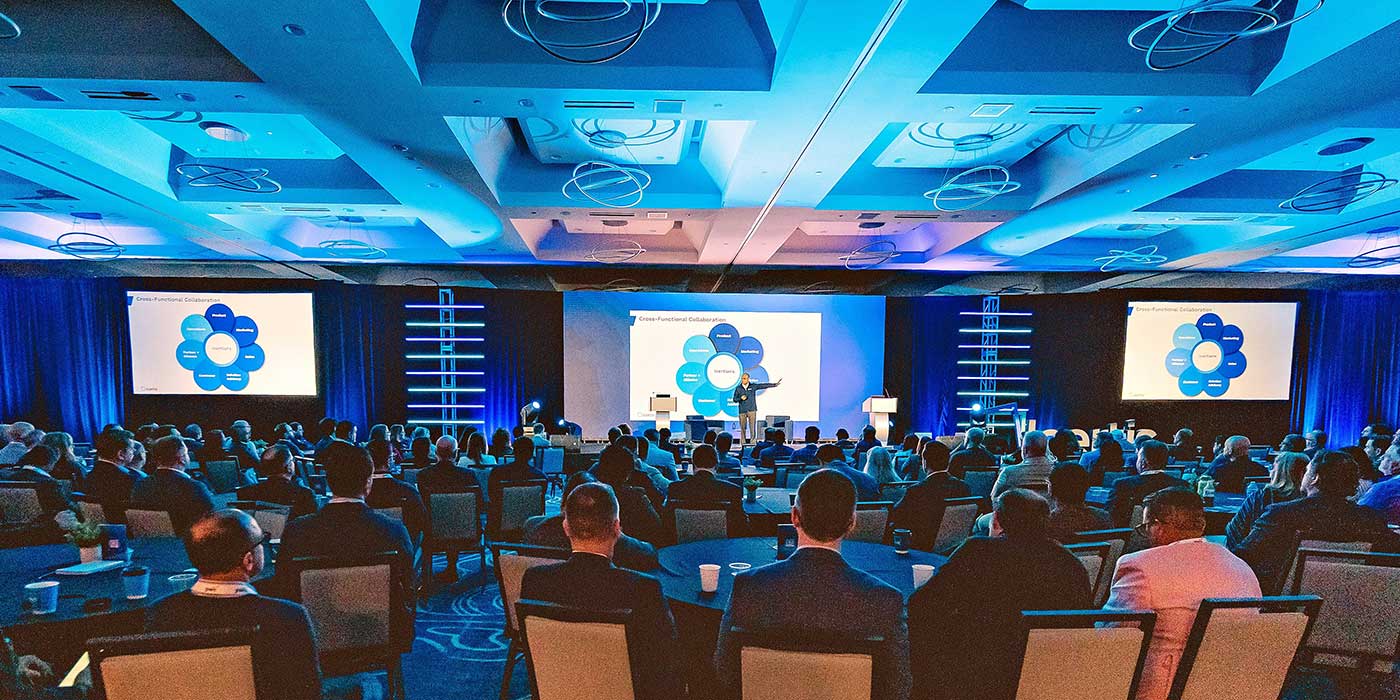
Four days. One hotel. 300 people in the room, 1,000 more watching live. Every surface had to hold together — stage, screens, signage, print, swag, and app — and it all needed to be built in six weeks.
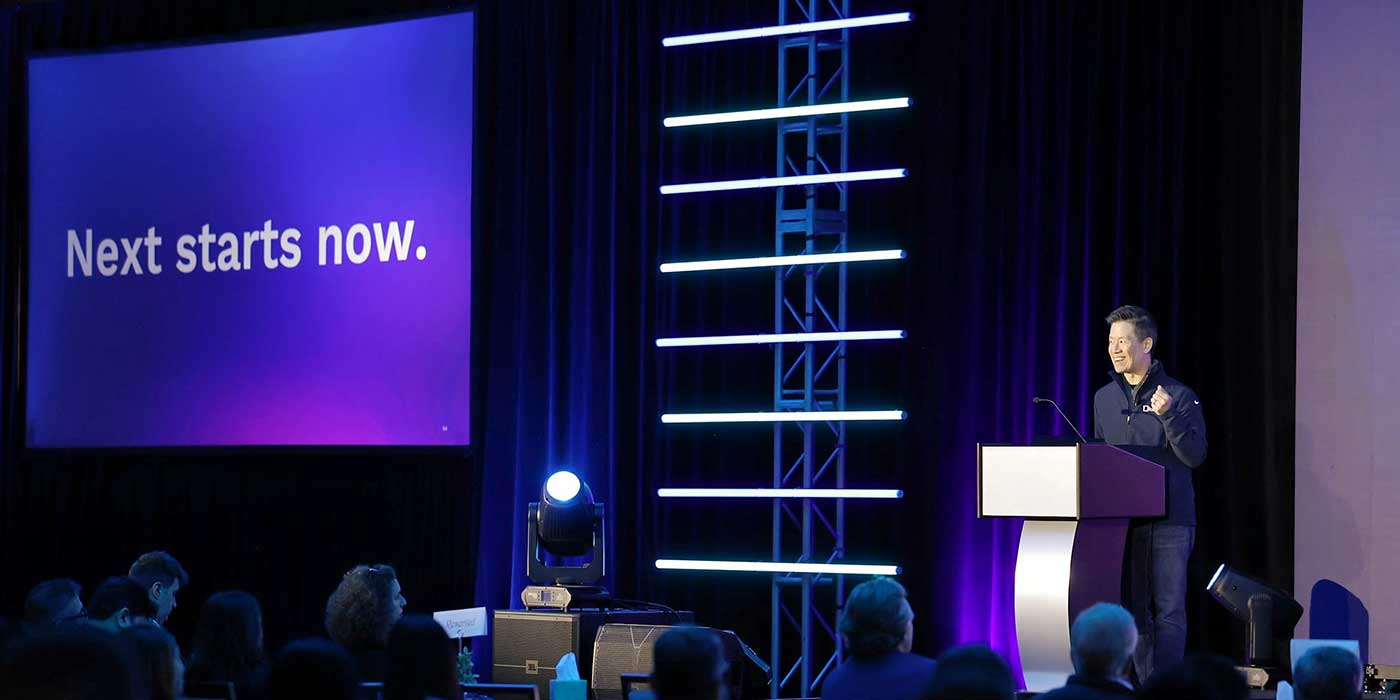
The theme: Next Starts Now. Our job was to make every touchpoint actually carry it.
A company kickoff at this scale isn't one design problem. It's a dozen simultaneous ones that all have to read as a single thing. We built it as a system from day one.
A full slide template system — not just a theme, but a complete set of layouts, infographic frameworks, and data visualization standards that any speaker could use and still look polished.
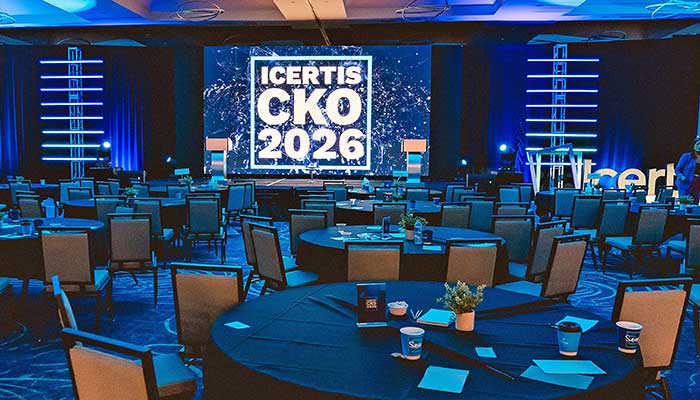
Wall wraps, elevator wraps, popup standees, and registration desk graphics. In a full hotel buyout, every surface is visible — so every surface got designed.
Multiple large-format digital screens, including the main stage display and registration desk video loop. Motion content designed to fill the room without overwhelming the live program.
Badges, lanyards, gala menu, branded swag — the tactile touchpoints that people carry out of the room and remember the event by.


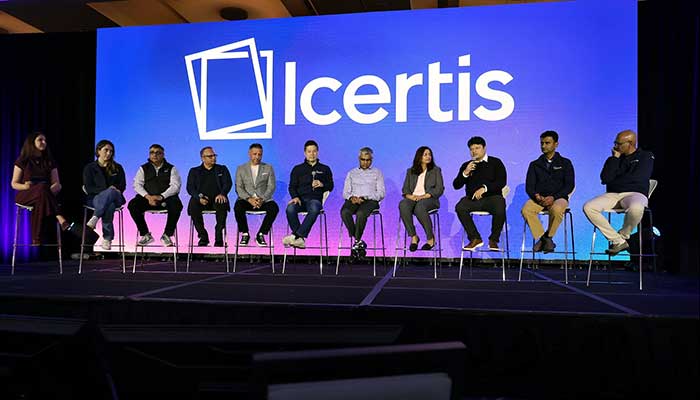
The slide system had to work for everyone — the CEO keynote and the breakout presenter who'd never touched a deck before. We built a template set with enough flexibility for speakers to tell their own story, and enough guardrails that 15 different people on stage still looked like one coherent event.
Data-heavy slides became visual narratives. Not spreadsheets with a logo on them.


300 people in a ballroom for four days. The environmental system had to read from across the room and hold up in close detail. The stage had to look like it belonged to something.
It did.
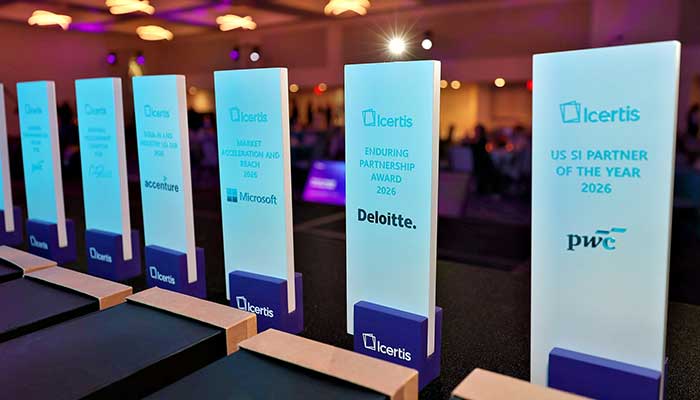
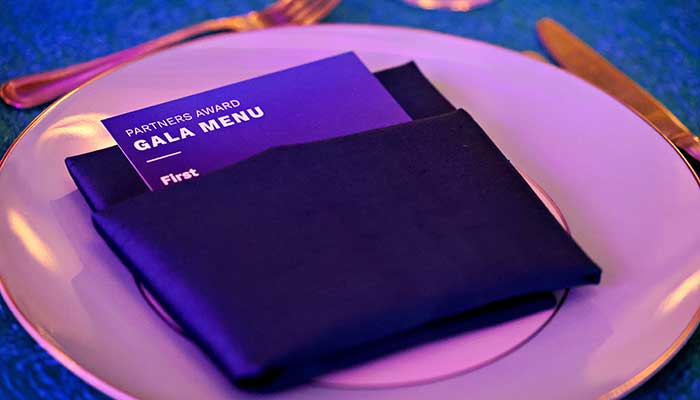
Badges, lanyards, gala programs, branded swag — each one an extension of the same visual system. At a full hotel buyout, these details are visible everywhere, all the time. They either reinforce the event or undercut it.


Visual system, wall wraps, elevator wraps, corridor signage, popup standees
Full slide template system, infographic layouts, main stage video, digital signage animations
Badges, lanyards, gala program, branded swag
Event app UI, registration desk video loop, large-format screen content